
Aviassembly Best Early Plane: The First Build That Pays
A cheap, reliable first aircraft for Aviassembly: which parts to buy with your opening scrap, what to skip, and how to fly it profitably.
Your first custom aircraft has one job: complete Grasslands missions with payloads the stock plane cannot manage, using parts you can afford in the first hour. It does not need to be fast, it does not need to be pretty, and it absolutely does not need a jet engine.
This is the build that does it, plus the reasoning so you can adapt it when your parts list differs.
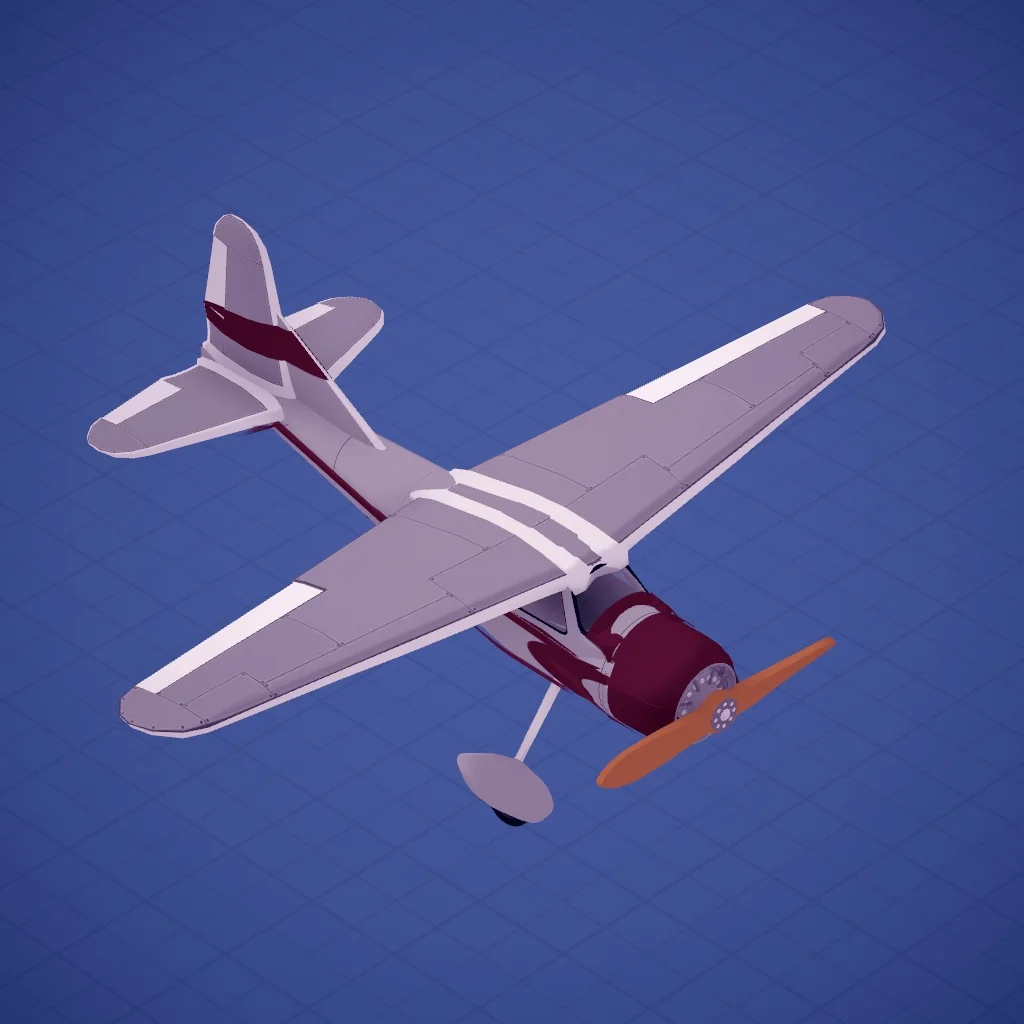
The specification
| Requirement | Target | Why |
|---|---|---|
| Cockpits | 1, upgraded if affordable | Cheap hold volume |
| Wings | One pair, wooden or better | Lift without scrap spend |
| Engines | 1–2 fuel engines | Predictable fuel burn |
| Fuel | 1 tank, capped thrust | Range for Grasslands hops |
| Cargo room | At least 120 litres | Fits wood logs and tools |
| Wheels | Front pair only | Rear wheel can wait |
| Extras | None | Every kilo costs climb rate |
The 120 litre target is the important line. The bulkiest early Grasslands commodity is wood logs at 120 litres; tools are 25, medicine 15 and small batteries 10. A hold that fits logs fits every early mission, and everything heavier arrives later when you have better wings.
Why not buy the biggest parts available?
Because coins are a size limit, not a budget, and the parts you unlock with scrap each carry a weight penalty. A heavy cockpit on a small airframe forces bigger wings, which force more engines, which burn more fuel. The early game punishes ambition more than it punishes caution.
Buy in this order:
- Cargo hold or a larger cockpit — the single biggest income upgrade.
- Stronger wings — needed the moment you add that cargo.
- A second engine — only when climb rate, not range, is your limit.
- Air brakes — cheap insurance for short strips.
The V tail shortcut
A conventional tail needs three surfaces. A V tail needs two and provides the same control. It is cheaper in scrap and lighter, which is exactly what an early build wants. There is no handling penalty worth worrying about at cargo speeds.
The rear wheel is optional as well: Aviassembly is permissive on takeoff and landing, and a two-point stance saves weight and coins. Add the tail wheel later if you start flying from rough strips.
How to fly it for profit
The early aircraft is a short-hop machine. Fly it on routes where the cargo is light and bulky, and avoid stone, steel and anything over 25 kg per unit until the wings are upgraded.
Three habits make the difference:
- Throttle back in cruise. Fuel burns per second at full thrust. Your first aircraft has a small tank; treat full throttle as a takeoff setting, not a cruise setting.
- Chain missions on one island. Mission rewards include scrap, and scrap is what unlocks the parts that end the early game.
- Land at every strip you see. Mission boards only appear after touchdown, and some airports exist purely to hand out work.
Upgrades worth doing
Once the aircraft pays for itself, the upgrade path is straightforward:
Wings first. The wooden wing fails at 225 m/s, which is fine for cargo work and not fine if you start diving. A stronger wing raises the ceiling for everything else you add.
Then a second engine. Not for speed — for climb rate at full load and for redundancy over water.
Then fuel. A second tank turns the short-hop machine into something that can reach the snow biome without a refuelling stop.
Last, cargo volume. The moment your hold can take 300 litres, the snow and desert mission boards open up properly.
Desert cargo is heavy — titanium is 25 kg per unit, lead 25, radioactive waste 65 after the balance pass. A plane built for 120 litres of wood logs will not lift it, and the distances involved make a failed attempt expensive.
When to replace it
Replace the early plane when you can afford the heavy lifter described in the best plane guide→. Keep the old airframe, though: it makes an excellent island hopper for short strips and hidden airports, where its light structure and low approach speed are advantages rather than compromises.
FAQ
Can I finish the game with the early plane? No. The desert and the campaign finale need payload capacity and range the early airframe cannot reach. It is a stepping stone, not a solution.
Should I use electric engines early? They work for very short hops and cost no fuel, but their range limits you to a single island. Fuel engines are more flexible at this stage.
How much should the first plane cost? Spend the coins you have on hold volume and wings. Coins refund when you delete parts, so there is no reason to hoard them.
Official source: Steam store page ↗ and patch notes ↗; in-game values checked on version 1.0.
Related Guides
- Beginner Guide→ — the first hour in detail.
- Best Plane→ — the three archetypes that replace this build.
- Parts→ — the full component list.
- Career Money→ — routes that pay.
Part balance and version notes: Steam announcements ↗. Aircraft examples: Workshop ↗. Store page: Steam ↗.