
Aviassembly Seaplane Guide: Pontoons and Water Landings
How pontoons work in Aviassembly, how to take off and land on water without sinking, and why the seaplane is the best firefighting platform in the game.
Seaplanes came with the 1.0 update, alongside firefighting, and the two systems are designed to work together. A floatplane can refill on any stretch of water, which makes it the fastest way to fight fires and a genuinely useful way to reach islands without runways.
The catch is buoyancy. Pontoons do not make an aircraft magically watertight, and the failure states are sinking and flipping.
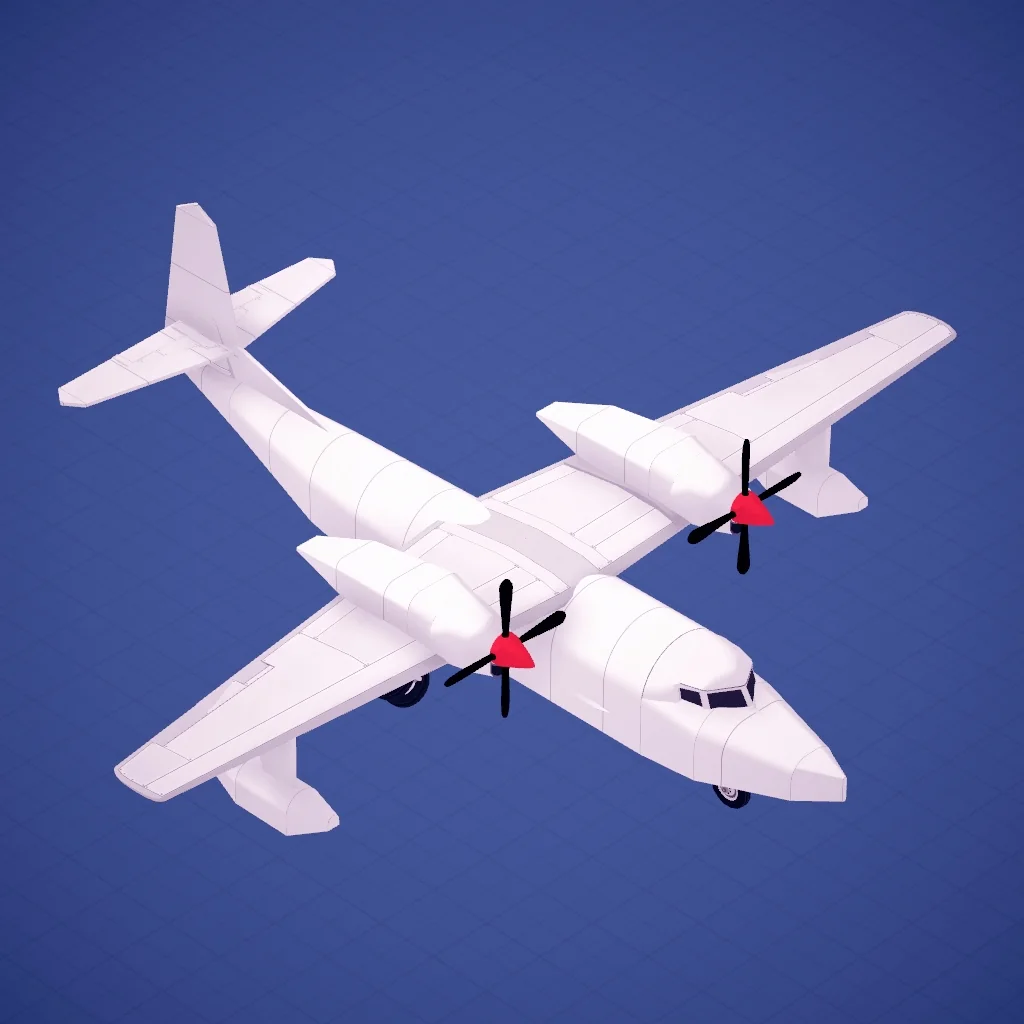
The two pontoon parts
There are two pontoon components, a smaller and a larger set. Both replace the wheeled landing gear and both add weight and drag.
The choice is not about style:
- The small pontoons suit light aircraft. They are enough for a single-engine plane with no cargo, and they punish hard landings.
- The large pontoons are for loaded aircraft. They displace more water, which is what keeps a heavy plane afloat.
The rule is displacement versus weight. If the aircraft floats lower than the pontoons' design allows, a landing that would be fine on wheels will put the nose in the water.
Taking off from water
Water takeoff is a longer, slower process than runway takeoff:
- Start pointed into wind if you can. Water drag is the enemy.
- Apply full power and hold the nose up. The aircraft needs to get onto the step — the point where it planes across the surface instead of ploughing.
- Do not rotate early. Pontoons dig in if you pull before there is enough speed.
- Climb gently. A steep climb after a water takeoff bleeds speed you cannot recover.
If the aircraft will not get onto the step, it is too heavy or the engine is too small. Adding power is cheaper than adding wing.
Landing on water
The landing is where seaplanes break:
- Approach shallow and slow. A nose-down arrival buries the pontoons.
- Touch down at the lowest safe speed. Water is unforgiving of excess energy.
- Do not brake with the nose. Let the aircraft settle; the pontoons will decelerate you.
- Avoid chop near shore. The calm water further out is easier to land on, even if it means a longer taxi.
A seaplane that lands hard will either bounce or nose over. Both end the flight.
Why the seaplane is the firefighting platform
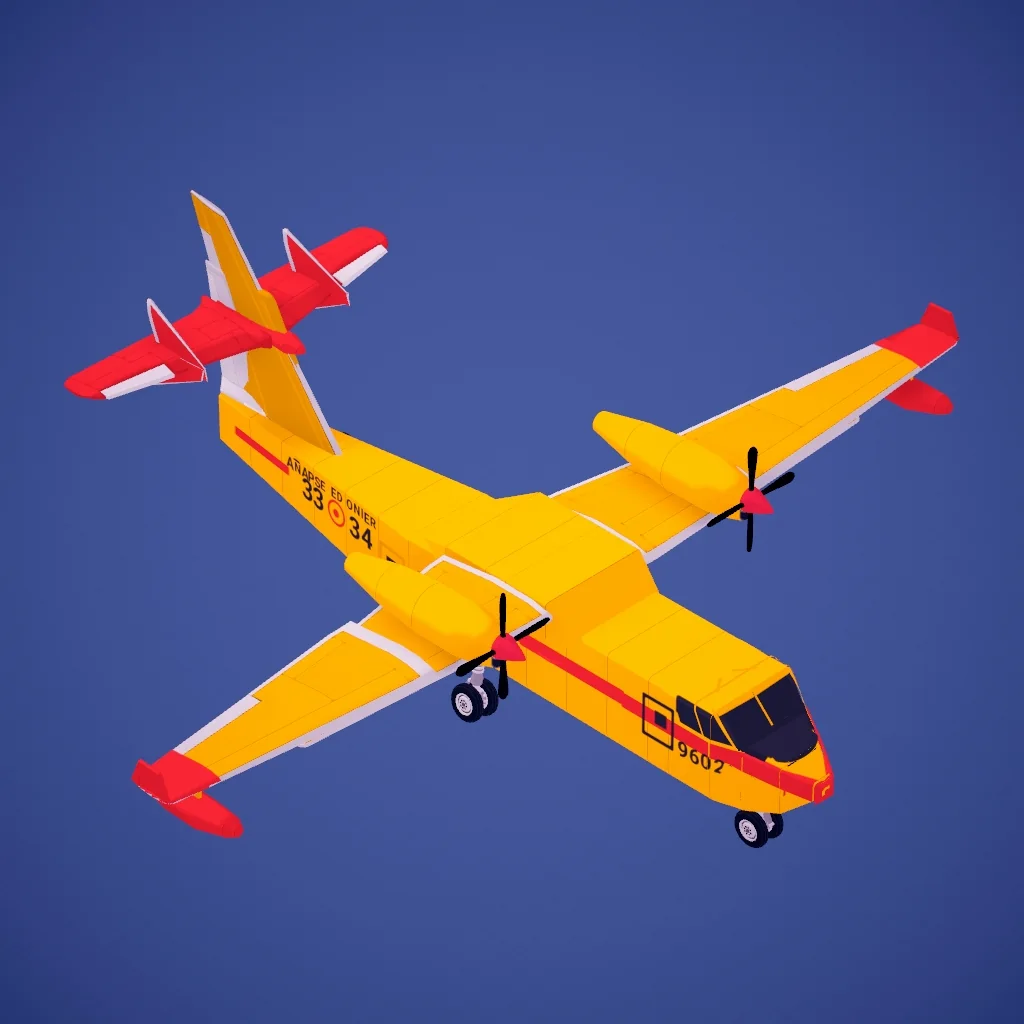
The 1.0 firefighting loop requires you to pick up water and drop it on burning buildings. A wheeled aircraft has to return to an airport between drops; a floatplane can refill on the nearest lake or stretch of sea.
That turns the seaplane into a water bomber with a very short turnaround. The firefighting guide→ covers the drop mechanics, but the platform choice is settled: floats, not wheels.
Building a practical floatplane
A reliable configuration for firefighting and island hopping:
- One reliable engine, sized for the loaded weight, with thrust capped so you can fly slowly without stalling.
- Large pontoons if you intend to carry water or cargo.
- A moderate fuel tank. Water refills are free; fuel is not.
- Air brakes if you have them. They make short water landings much easier.
- A camera part pointed down, for judging the water surface on approach.
Keep the fuselage short. Every extra block is weight the pontoons have to float.
A loaded floatplane landing at cruise speed will bury a pontoon and flip. Slow to approach speed, descend gently, and touch down with the nose high.
Water as a runway network
Beyond firefighting, pontoons open up the map. Any calm water is a potential landing site, which means you can visit islands without strips, refuel your position on long crossings, and stage missions from places the map does not mark.
The trade-off is speed and payload: floats cost drag and weight, and a floatplane will always be slower than the same aircraft on wheels.
Before you take a loaded floatplane to a fire, do three touch-and-goes on open water with no cargo. The handling difference between empty and loaded is larger than it looks.
FAQ
Can I put pontoons on any aircraft? Yes, if the airframe can carry the weight and the engine can get it onto the step. Small, underpowered planes will not take off from water.
Do pontoons work on land? No. They are a replacement for wheels, and a floatplane needs water to land.
Why does my seaplane flip on landing? Usually speed and nose attitude. Touch down slower, with the nose higher, and check that the pontoons are sized for the loaded weight.
Official source: Steam store page ↗ and patch notes ↗; in-game values checked on version 1.0.
Related Guides
- Firefighting→ — the reason to build one.
- Parts→ — pontoon specs in context.
- Helicopter→ — the other vertical option.
- Best Plane→ — airframes that convert well to floats.
Seaplanes and firefighting shipped with 1.0 ↗. Community floatplanes: Steam Workshop ↗. Store page: Steam ↗.