
Aviassembly Engines: Jet, Electric, Wood and When to Use
Which Aviassembly engine to use for range, payload or speed, how the optimal-speed curve works, and why capping thrust is the best upgrade in the game.
Engines are the most consequential choice in an Aviassembly build. They set your cruise speed, your fuel bill, your climb rate and — indirectly — how much wing you need. Pick wrong and you spend the rest of the build compensating.
This page explains how the engine families differ, how the efficiency curve works, and the one setting that turns a thirsty engine into a long-range one.
The families
Wood engines. The starting option. Low thrust, low cost, and the only engine that matters for one specific achievement: finish the campaign without researching any other engine type. They are slow and they are enough for the Grasslands.
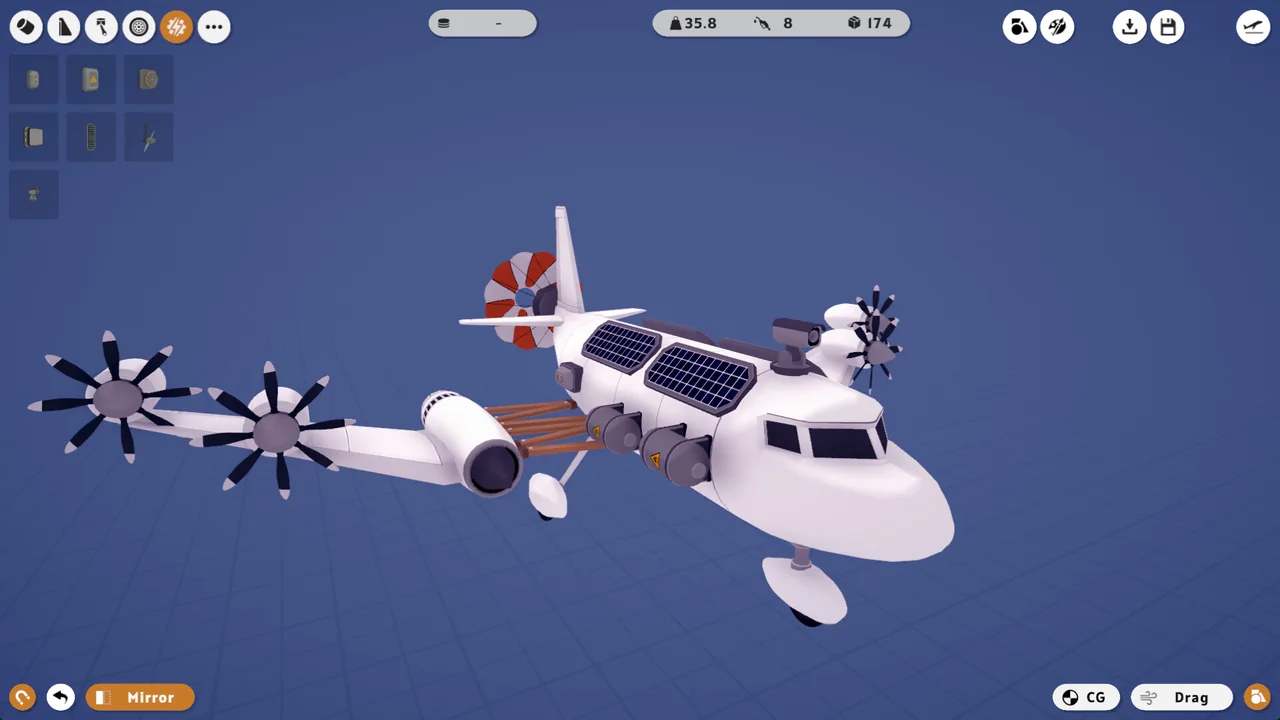
Fuel engines (piston and turboprop). The cargo workhorses. Moderate thrust, predictable fuel burn, and they keep working across a wide speed range. A twin-engine turboprop transport is the most efficient way to move heavy cargo in the mid-game.
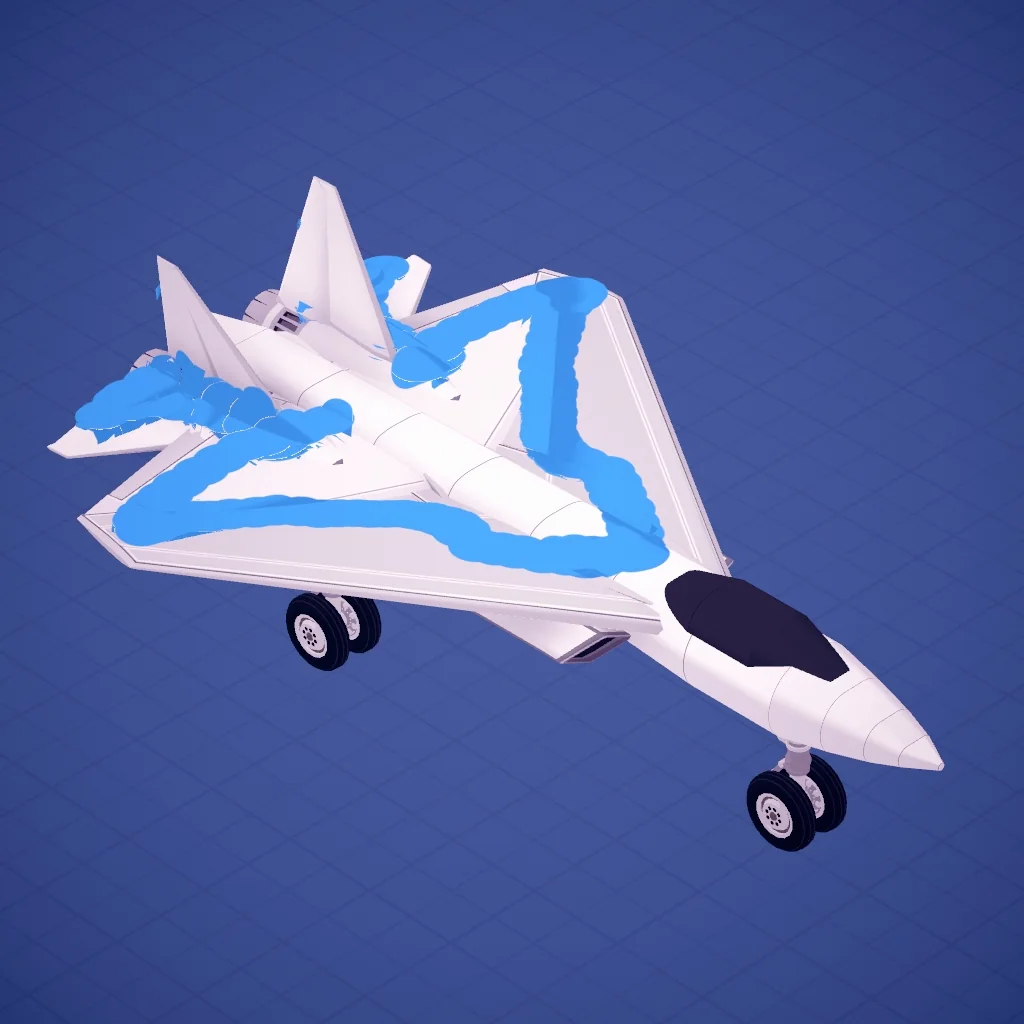
Jets. High thrust, high fuel burn, and they want to go fast. A jet flown slowly is a jet wasting fuel; the efficiency curve punishes you for it. Jets belong on courier builds and long desert crossings.
Ramjets. The late-game speed answer, buffed from 4250 to 6000 thrust in Update 10. Enormous power, thirsty, and happiest at high speed. If your airframe can survive the cruise speed, a ramjet makes the map small.
Electric engines. Draw charge instead of fuel. Cheap to run, short-ranged, and perfect for island hoppers and light sightseeing builds. The default aircraft starts with a small electric charge, which is a hint about how the early game expects you to fly.
Rocket engines. Thrust for a short burst. Useful for takeoff assist, for the edge-of-space achievement, and for designs that need to escape a short strip.
Helicopter rotors. A separate family with dedicated cockpits. Vertical lift, slow cruise, high fuel burn. Covered in the helicopter guide→.
Balloons. Not an engine, but they provide lift without thrust. They make impossible payloads flyable at the cost of speed and control.
The optimal-speed curve
Since Update 6, every engine displays an optimal speed in the editor. That number is where the engine produces thrust most efficiently relative to the airspeed it is flying through. Fly below it and you are burning fuel for less forward motion; fly above it and you are fighting drag.
Practical consequences:
- A jet cruising at 60% of its optimal speed is wasting fuel. Either speed up or fit a different engine.
- Two engines with different optimal speeds on the same aircraft will fight each other. Match them.
- The optimal speed is a target for cruise, not for takeoff. You still need thrust margin for climb.
Thrust capping: the free upgrade
Right-click an engine in the editor and open its settings. You can:
- Cap maximum thrust. The engine cannot exceed that output, which prevents overspeeding a weak airframe and reduces fuel burn on every flight.
- Assign a control group. Each engine gets its own input, which enables differential steering and single-engine flight.
- Enable reverse. Essential for pushing back from a short strip and for propeller-reversal braking after touchdown.
Capping is particularly valuable on cargo aircraft. A big engine capped to 60% climbs more slowly but sips fuel, and you can always raise the cap for a short-field takeoff.
Matching engines to missions
| Mission type | Engine | Why |
|---|---|---|
| Early Grasslands hops | Wood or small fuel engine | Cheap, adequate, low fuel burn |
| Snow cargo runs | Turboprop pair | Efficient at moderate speed with heavy loads |
| Desert long haul | Jet or turboprop | Range and speed over big distances |
| Speed records | Ramjet | Highest thrust in the game after Update 10 |
| Island hopping | Electric or small fuel | Short legs, low cost |
| Ship landings | Rotors | No runway required |
Fuel maths worth remembering
Engine fuel usage is per second at full thrust. That single fact explains most range problems:
- Throttling back to 70% saves a large share of fuel for a small loss of speed.
- Hovering is the most expensive manoeuvre in the game, because you are at high thrust with zero forward speed.
- A plane with two engines burns roughly double the fuel of a single-engine plane at the same thrust setting.
Fuel tanks multiply their displayed figure by 100, so a tank listed at 3 gives 300 units. Plan range in seconds of cruise rather than in kilometres.
Before adding a tank, cap your engines and fly at their optimal speed. Most players find that this alone extends range by enough to skip the extra tank — which saves weight, which improves climb, which improves everything.
FAQ
What is the best engine in Aviassembly? The ramjet has the highest thrust, but the best engine is the one whose optimal speed matches your mission. A capped turboprop beats a ramjet on most cargo runs.
Why does my jet run out of fuel so fast? Because you are flying it below its optimal speed, or at full thrust constantly. Cap it and cruise at the number shown in the editor.
Do electric engines need fuel? No. They draw electric charge, which is replenished differently from fuel. Their limit is charge capacity, not tank size.
Official source: Steam store page ↗ and patch notes ↗; in-game values checked on version 1.0.
Related Guides
- Parts→ — the full component catalogue.
- Best Plane→ — three builds with engine choices.
- Cargo→ — payloads that define the engine requirement.
- Helicopter→ — the rotor family.
Engine balance changes: Steam announcements ↗. Base game: store page ↗. Builds using these engines: Workshop ↗.