
Aviassembly Firefighting Guide: Water Drops and Rewards
How the Aviassembly firefighting loop works: filling on water, aiming drops at burning buildings, and the aircraft that makes the job profitable.
Firefighting is the headline addition of the 1.0 update. It is a self-contained loop: find a fire, fill up on water, drop it on the burning buildings, and collect coins for every fire you put out.
It also rewards a very specific kind of aircraft. A fast jet is useless here; what you need is something that can fly slowly, low and repeatedly.
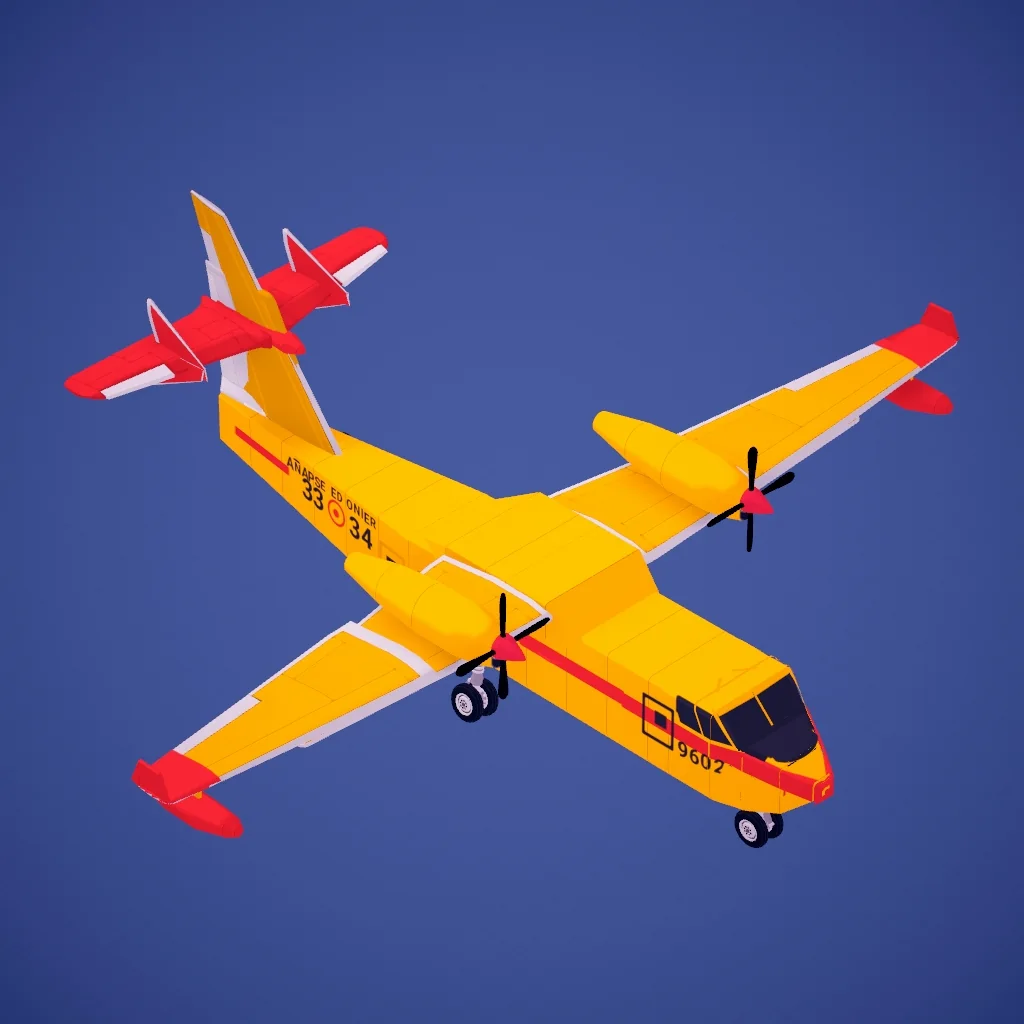
The loop, step by step
- Find a fire. Burning buildings appear on the map as active events. They are visible from the air, which makes them easy to spot on a transit.
- Fill on water. Hover low over the sea or a lake and the aircraft takes on water. This is why floats or a hovering capability matter.
- Fly to the fire. Stay low; altitude you have to lose is time you waste.
- Drop on the buildings. The drop is aimed, not automatic. You need to be over the fire, at a sensible height, with a stable approach.
- Repeat until the fire is out. Each extinguished building pays coins, and a full fire pays more than a partial one.
The loop is intentionally short, which is what makes it a good money source in the mid-game: fill, drop, refill, drop, with almost no dead time.
The right aircraft
Firefighting punishes three things: high landing speed, poor low-speed handling and short range.
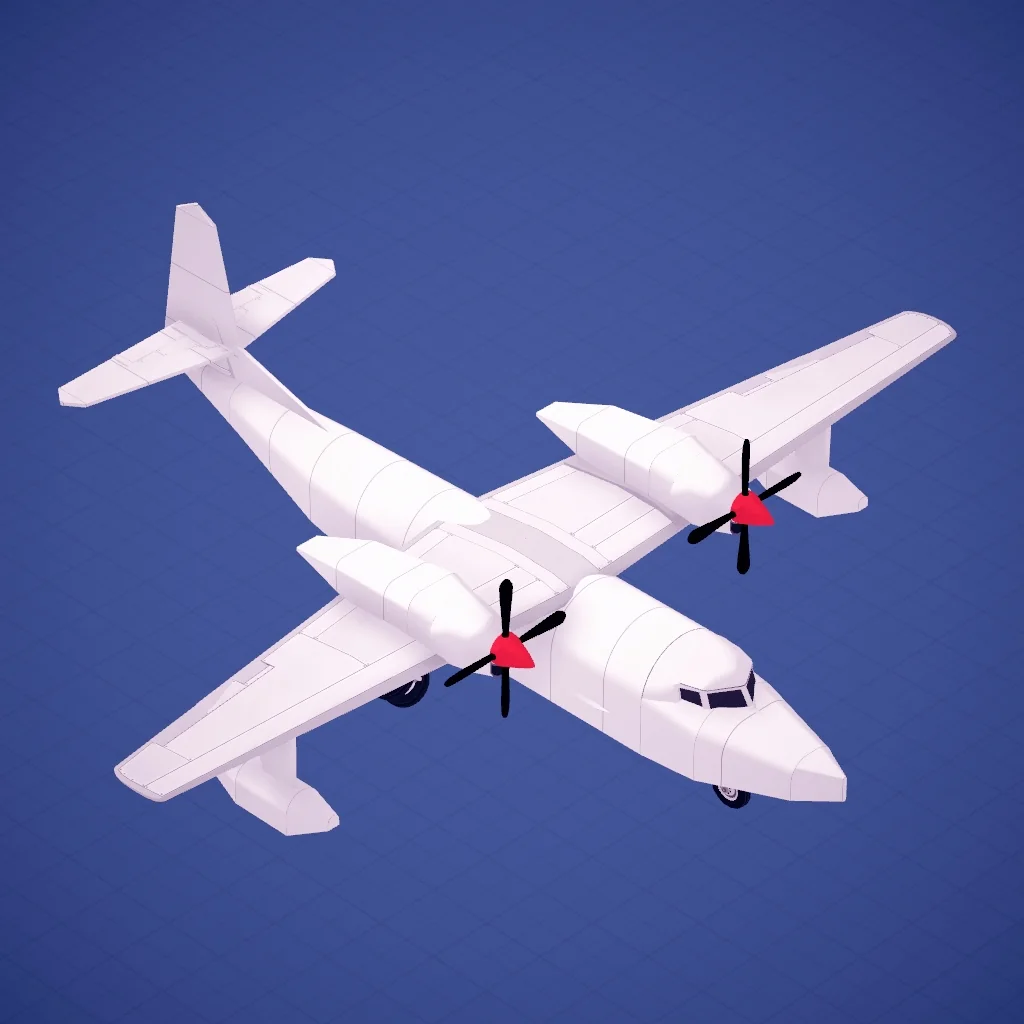
Best: a floatplane. Pontoons let you refill on any water, so your turnaround is measured in seconds. The seaplane guide→ covers the buoyancy rules.
Good: a helicopter. It can hover over water to fill and drop precisely, and it does not need a runway. The downside is payload and speed between fires.
Workable: a slow fixed-wing aircraft with a nearby water source. If the fire is close to the coast, a landplane with a short field capability can shuttle between a strip and the fire, but the turnaround is much worse.
Bad: a jet. Too fast to line up a drop, too thirsty to loiter, and unable to refill anywhere except a runway.
Aiming the drop
The drop rewards a stable, slow pass rather than precision dive-bombing:
- Approach into wind if possible, so your ground speed is lower and the pass lasts longer.
- Fly the length of the fire, not across it. A pass along the burning row covers more buildings.
- Drop early rather than late. Water falling short still lands near the fire; water dropped past it is wasted.
- Climb away gently. A hard pull-up after the drop bleeds speed and puts you back at altitude for the next run.
If a drop misses, do not circle tightly. Fly out, turn wide, and come back on a stable line. Tight turns at low speed are how firefighting flights end in the water.
Filling without sinking
Hovering low over water is the risky part, especially in a floatplane. Two habits keep it safe:
- Keep some forward speed. A fully stalled hover over water gives you no margin if a wing dips.
- Do not descend below the height you need. The fill happens close to the surface; you do not need to touch it.
Helicopters have an easier time, but the same rule applies: keep a reserve of lift so you can climb away cleanly.
Is firefighting profitable?
Yes, particularly once you have a floatplane. Fires pay coins per building, and the loop's short cycle means a good route can outperform cargo runs for coins per minute.
The limitation is scrap. Firefighting pays coins, not the scrap that unlocks parts, so treat it as a way to fund aircraft size rather than a replacement for missions.
The best use is as a supplement: run cargo missions for scrap, and fight fires when a fire is close to your route.
Firefighting on hard mode
Hard Mode, added in 1.0, makes fires less forgiving: less margin for a missed drop and less time before a fire spreads. The hard mode guide→ covers the general difficulty changes; for fires specifically, the answer is a slower, more stable aircraft and more passes rather than fewer, bigger drops.
A dedicated floatplane with a capped-thrust engine will out-earn any converted cargo plane at firefighting. Build it after you unlock pontoons and keep it for the whole campaign.
FAQ
How do I start a firefighting mission? Fires appear as active events in the world. Fly to one, fill on water, and drop on the burning buildings.
Can I firefight with a normal plane? Only awkwardly. Without floats or rotors you have to refill at an airport, which makes the turnaround far too slow.
Does firefighting pay scrap? It pays coins. Scrap comes from missions and world pickups, so firefighting funds aircraft size rather than unlocks.
Official source: Steam store page ↗ and patch notes ↗; in-game values checked on version 1.0.
Related Guides
- Seaplane→ — the ideal firefighting platform.
- Career Money→ — where firefighting fits the economy.
- Hard Mode→ — the 1.0 difficulty option.
- Parts→ — floats, tanks and cameras.
Firefighting shipped with 1.0 ↗. Community water bombers: Steam Workshop ↗. Store page: Steam ↗.